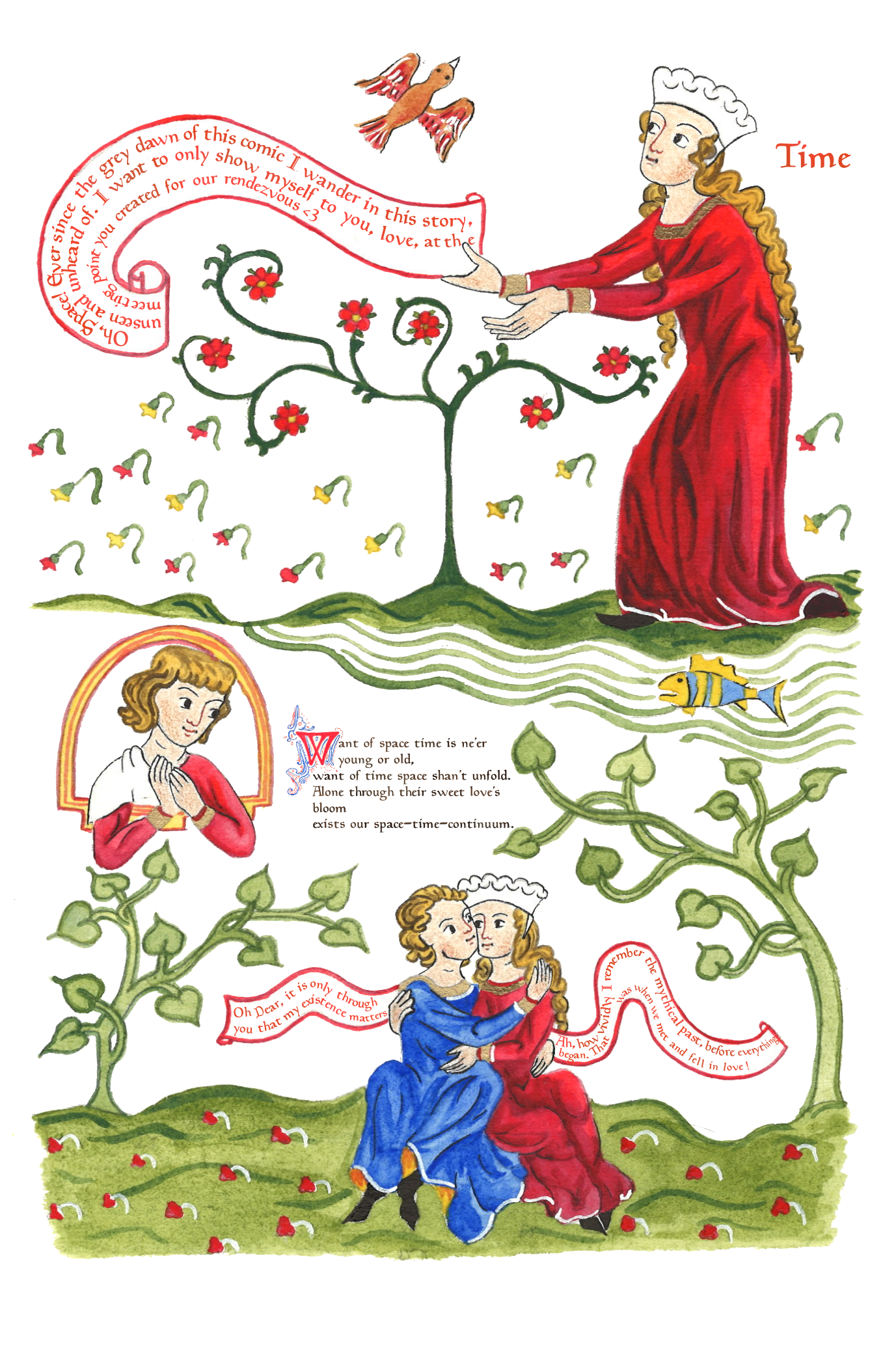
Space and time only come into existence through the characters who move within them. Different times are often represented by different spaces = chronotopes. There, space and time are intertwined, and time passes as the story requires. Every story, every form of narrative, has its own chronotope – and in many stories there are several chronotopes.
Typical examples from the Middle Ages are e.g. locus amoenus and locus terribilis, fairy islands and other islands, or places such as the "Minnegrotte" (Cave of Love) in Gottfried von Straßburg’s "Tristan".